Shincofab and Its Approach to Sheet Metal Fabrication
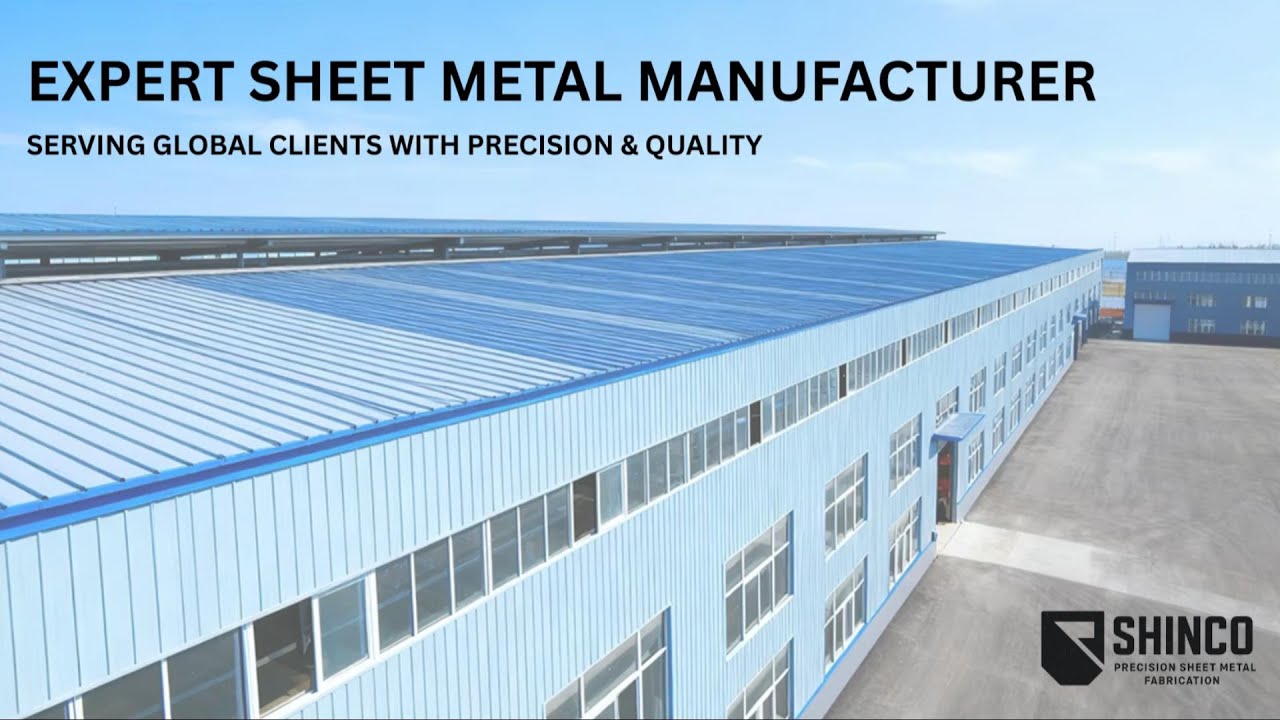
The sheet metal fabrication is a major in contemporary manufacturing. It is used in the development of components that require stringent standards for strength, accuracy, and longevity. It is either straightforward brackets or elaborate enclosures, and both require careful planning and regular implementation. The shincofab considers fabrication to be a precise, consistent production process with a practical design support that will result in the production of parts that are not excessively complex and will fulfill the actual production requirements.
Understanding Fabrication Basics
Sheet metal fabrication begins with plain sheets of metal, which are cut, drawn, and formed into useful components. It involves cutting, bending, welding, and finishing. All these steps have to be under control since minimal mistakes can impact the way the parts are fitted. The systematic process can be used to minimize errors and enhance the general quality.
Focus on Precision
One of the most important issues in fabrication is accuracy. Components have to fit into tight areas alongside other sections, and even slight variations can cause trouble. Shincofab also ensures that its standards of measurement are the same throughout the production process so that every part produced should be like its design. This attention to accuracy will help minimize rework and improve assembly efficiency.
Material Handling
Different materials exhibit different behaviors during fabrication. Aluminum in the form of metal is flexible, yet not as powerful as steel. Stainless steel cannot corrode; however, it will require additional control during processing. To avoid defects such as cracking or warping, an individual also needs to choose the appropriate material and treat it properly.
Cutting Processes
The initial process in working on metal sheets is cutting. They use methods such as laser cutting and punching, as specified in the design. Laser cutting can offer smooth edges and perform well with detailed shapes, whereas punching can be used with repetitive patterns. Proper cutting will mean that subsequent steps will not have problems relating to alignment.
Bending and Forming
Bending gives the flat sheet its final shape. The angle and position of each bend must be precise to ensure a proper fit. Press brake machines are used to control these bends. Careful setup is required because incorrect angles can lead to assembly problems or weakened structures.
Welding and Assembly
Some parts require welding to join multiple pieces together. This step must be handled carefully to avoid distortion caused by heat. Clean welds improve strength and appearance. In many cases, fabrication also includes assembly steps so that parts are ready for installation.
Surface Finishing
Surface finishing enhances the appearance of metal components. Powder coating and anodizing are among the coatings used to prevent corrosion. The visual similarity is also generated by finishing, which should be a significant concern in the visible parts. Different parts will require different finishes depending on their location and use.
Design Support
Good design is the basis of good fabrication. Engineers have to think about how parts will be created, rather than how they will work. Shincofab provides design feedback to prevent troublesome bends or poor hole placement. This assistance is used to maintain the feasibility of the designs and make them cost-effective.
Prototyping Approach
By prototyping, designs can be tested before full-scale manufacturing of the actual product begins. Problems not evident in drawings can be seen through small batches. Neither does a person need to waste a lot of material making adjustments. This is done to enhance the reliability of the finished design.
Production Flexibility
Production scales of various projects vary. Others require very small amounts, and some require very large amounts. The Shincofab process is designed to support both small and large runs. Elastic production helps meet diverse customer demands without compromising quality.
Quality Control
Fabrication is an important aspect of inspection. All the parts should also be inspected to ensure they fit the required standards and dimensions. Quality is checked using measuring tools and visual inspections. There is also a constant check to facilitate avoiding the installation of defective components until the final assembly stage.
Process Consistency
Consistency requires uniformity in the quality of each part. This is particularly significant in high-level production, where variation may well lead to severe problems. Processes are also maintained using steady results, facilitated by controlled processes and trained operators.
Practical Outcomes
The aim of fabrication is to create parts that are operable in the actual situation. This implies considering how parts will be used, assembled, and serviced. Shincofab concentrates on realistic results so that completed parts will work as intended in the long run.
Conclusion
An efficient and consistent method of sheet metal fabrication minimizes errors and enhances product quality. Material handling, precision, and consistent processes can allow manufacturers to create parts that meet real needs by identifying and creating reliable components. Knowledge of such techniques enables engineers to create superior parts and guarantees an easier manufacturing process throughout.